LatestBest Practices for Identifying and Securing Non-Human Identities
Resource / Online Journal
Threat, Vulnerability, and Risk: Key Concepts and Differences
Understand threats, vulnerabilities, and risks in cybersecurity, with 2026 trends, real examples, and risk‑management strategies that help organizations strengthen defenses, reduce exposure, and stay protected against evolving attacks.
Published on Feb 2, 2026
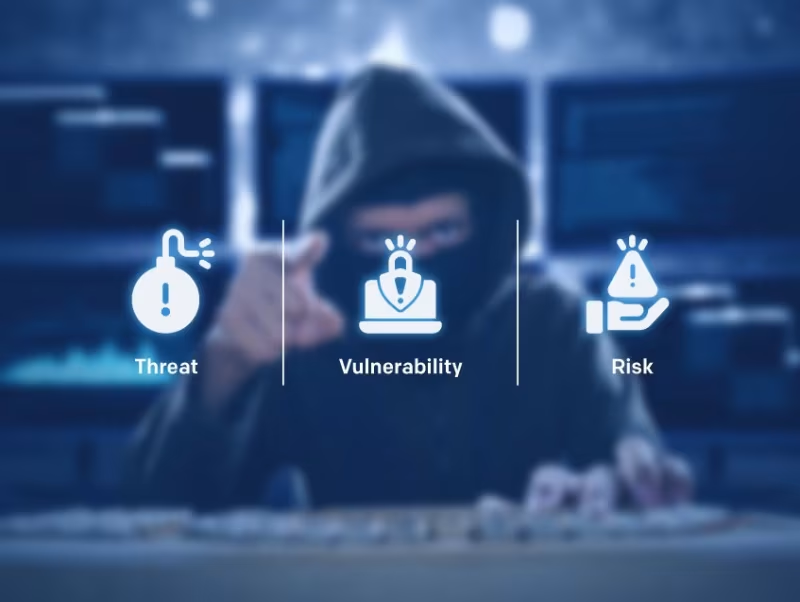
What Is a Threat, Vulnerability, and Risk?
Understanding threat, vulnerability, and risk is a fundamental concept in cybersecurity, helping organizations perform accurate risk assessments and analyses.
A threat is any potential danger, such as ransomware attacks, DDoS attacks, SQL injection attacks, or human errors, that a threat actor or event could exploit to take advantage of vulnerabilities.
A vulnerability is just a weak spot in technology or people that attackers can take advantage of. It could be a weakness in software, operating system, process, or person, including unpatched systems, weak passwords, network misconfigurations, or human behavior caused by insufficient training. Vulnerabilities make it easier for hackers to attack a system.
Risk is the likelihood and potential impact of a threat exploiting a vulnerability. This damage often includes data breaches, data theft, or unauthorized entry. The classic risk equation, Risk = Likelihood × Impact. It helps asset owners assess risk, describe risk, and manage risks effectively.
2026 Insights and Trends
Cybersecurity in 2026 is shaped by industrialized cybercrime, where attackers leverage AI to scale operations and automate cyber threats. Organizations face AI‑driven malware, deepfakes used for social engineering, and supply chain risks such as poisoned software packages in cloud infrastructure. Ransomware operations increasingly pair extortion with DDoS‑as‑a‑Service, while insider threats grow through gig‑based access and human vulnerabilities due to a lack of employee training.
Vulnerability management also evolves. The CISA Known Exploited Vulnerabilities (KEV) catalog continues to spotlight actively exploited flaws, including zero‑days across email platforms, SD‑WAN devices, and package managers, pushing teams toward risk‑based prioritization. Instead of relying solely on static scoring, organizations integrate threat intelligence, asset context, and exploit data to assess risk and manage risks more effectively.
Research highlights a shift from traditional CVSS scoring toward dynamic Threat and Vulnerability Management (TVM) systems. These approaches calculate risk using real‑time indicators, helping security teams mitigate risks faster as exploits emerge. With attackers accelerating tactics, TVM becomes an ongoing practice that strengthens internal controls, guides resource allocation, and supports a stronger risk management strategy.
Real-World Examples of Threat, Vulnerability, and Risk
Real‑world scenarios make the relationship between threat, vulnerability, and risk easier to understand. The classic car example demonstrates this well: a threat is a joyrider looking for an opportunity, the vulnerability is an unlocked door or open window, and the risk is the chance of theft, especially when the car is parked in a high‑crime area. This mirrors how cyber threats exploit system weaknesses to cause a negative impact.
In cybersecurity, the same pattern appears in 2026 ransomware attacks. Threat actors exploit unpatched systems and design flaws in hybrid cloud environments, using supply chain infiltration to steal customer data before launching encryption-based extortion. This creates significant potential impact for asset owners managing critical systems.
Telecom providers also face combined DDoS attacks and insider threats. Rapid, high‑volume DDoS bursts paired with credential misuse or human errors disrupt operations, expose sensitive data, and increase overall cyber risk. These examples show how threats exploit vulnerabilities across both physical and digital environments and why ongoing risk mitigation and vulnerability management are essential.
Risk Management Strategies
An effective risk management strategy begins with the ability to identify vulnerabilities, understand the threat, vulnerability, and risk relationship, and implement controls that mitigate risks before they escalate. Organizations rely on strong vulnerability management programs, pairing continuous scanning with security measures and user authentication methods like multi‑factor authentication, 2FA, strict access controls, and ongoing employee training to reduce human vulnerabilities and prevent unauthorized entry. These steps will reflect NIST‑aligned practices for assessing risk and strengthening overall risk management.
Risk mitigation focuses on fixing what attackers target most: unpatched systems, misconfigurations, weak passwords, and cloud exposures. Teams patch quickly, simulate attacks through penetration testing, and use threat intelligence to prioritize risk and manage risks efficiently. Training employees on phishing and social engineering also reduces the likelihood of cyber threats such as ransomware attacks or malicious code execution.
Cybersecurity best practices reinforce internal controls across operating systems and cloud environments. Following the NIST Cybersecurity Framework, Govern, Identify, Protect, Detect, Respond, and Recover helps organizations implement security measures, allocate resources effectively, and maintain an ongoing practice of risk mitigation. These combined efforts ensure that security teams stay ahead of potential consequences and lower the overall risk involved in modern environments.
Conclusion
Platforms like Okta, Ping Identity, and SailPoint help deliver integrated identity security capabilities across IAM, IGA, PAM, and access management ecosystems, strengthening authentication, governance, and privileged‑access controls. Meanwhile, cybersecurity service provider TechDemocracy, leveraging both this partner ecosystem and its own technologies, delivers cost-effective, risk‑based cybersecurity solutions, helping clients stay safe, compliant, and within budget. Contact us today and get a free IAM assessment and advisory!
Recommended articles
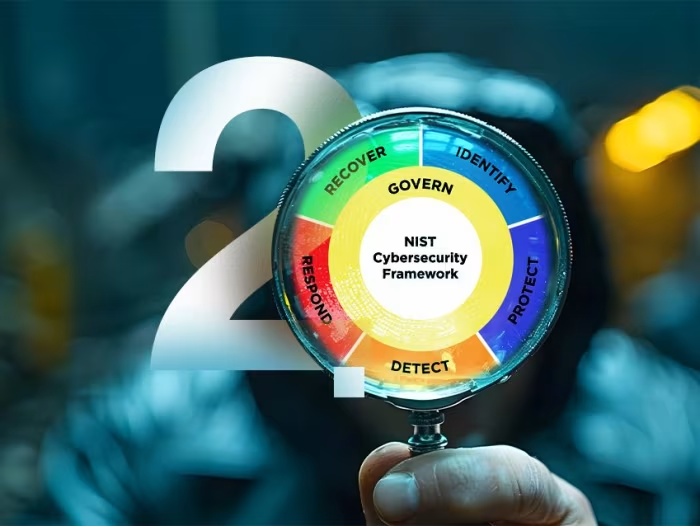
Managing Risk with NIST Cybersecurity Framework (CSF) 2.0 in 2026
Take Your Identity Strategy
to the Next Level
Strengthen your organization's digital identity for a secure and worry-free tomorrow. Kickstart the journey with a complimentary consultation to explore personalized solutions.