LatestBest Practices for Identifying and Securing Non-Human Identities
Resource / Online Journal
Cybersecurity for Small and Mid-Size Businesses in 2026
Read the article now to learn some important cybersecurity strategies for small and medium size business need for 2026 to enhance your cyber safety.
Published on Nov 28, 2025
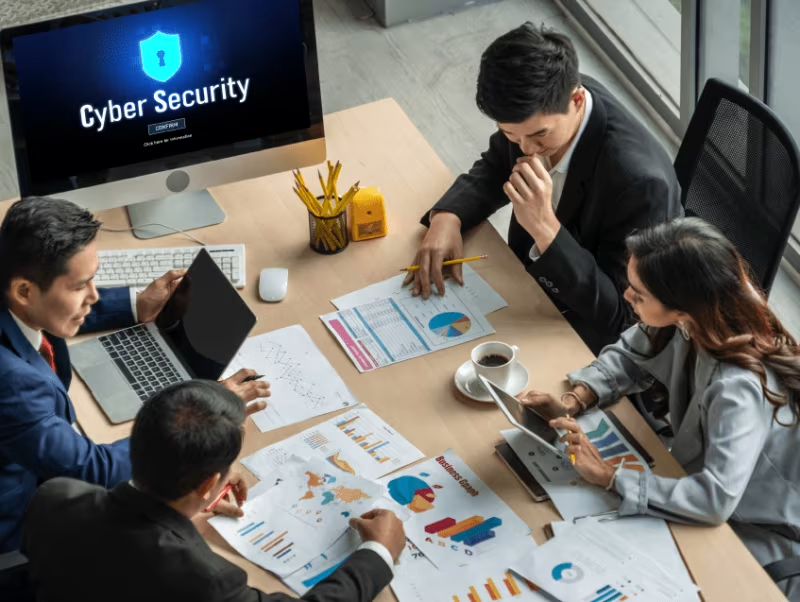
Cybersecurity has become a critical concern for small and medium-sized businesses (SMBs) in 2026. Although SMBs typically operate with limited resources, they are increasingly targeted by cybercriminals due to perceived vulnerabilities and the potential value of their data. Data protection and the security of digital information are essential for these businesses to maintain customer trust and ensure business continuity. These businesses need affordable, practical, and effective identity security strategies.
Understanding Cybersecurity Threats for SMBs
SMBs face a range of security threats like phishing scams, ransomware attacks, insider threats, and data breaches. The evolving threats require businesses to stay informed and adopt proactive risk management practices.
For example, managing the organization's attack surface is crucial for reducing risk, as it minimizes potential points of entry for cybercriminals. Simple but crucial steps, such as employee awareness around phishing and regular software updates, can significantly reduce vulnerabilities. It is also important to identify new vulnerabilities as they emerge to address risks before they are exploited.
Cloud and Endpoint Security for SMBs
As cloud adoption grows, securing cloud services alongside endpoint devices is also important. It is often seen that cloud misconfigurations can introduce significant vulnerabilities that cybercriminals may exploit. Thus, making proper configuration management with things like implementing multi-factor authentication is essential to prevent breaches.
SMBs benefit from cloud security architectures that include encryption, access controls, and regular patch management. Endpoint security software on desktops, laptops, and mobile devices ensures that endpoint vulnerabilities do not become attack gateways.
For example, compared to traditional on-premises file storage, migrating to cloud-based solutions like Google Workspace offers SMBs professionally maintained, secure email and file storage with reduced maintenance overhead.
Leveraging Artificial Intelligence Smartly
SMBs can leverage AI-powered tools like advanced endpoint detection and response (EDR) and phishing simulation platforms to enhance threat detection and workforce readiness. Ensuring robust AI security is essential to protect these AI systems from cyber threats and malicious attacks.
Awareness of AI-driven attack tactics, including the risk of malicious code specifically targeting AI systems, and balancing AI investments with budget constraints, is crucial. Cybersecurity teams play a critical role in managing AI-based defenses, responding to AI-driven threats, and maintaining the overall security posture of organizations.
Network Security on an SMB Scale
Network security fundamentals, such as deploying firewalls and intrusion detection systems, can easily be adapted to SMB scale and budget. Keeping the operating system up to date is also essential, as regular updates help protect against viruses, malware, and other threats.
For example, Software-defined wide-area networking (SD-WAN) offers cost-effective network traffic management and segmentation. This limits lateral movement by attackers and helps to protect each computer system from network-based threats.
Affordable continuous monitoring solutions, including managed security information and event management (SIEM) systems, enable focused threat detection and faster responses. Additionally, restricting permissions to install software on network devices is a key measure to prevent unauthorized access or security breaches.
Governance, Compliance, and Risk Management
SMBs must navigate relevant regulatory frameworks without excessive overhead. Understanding applicable compliance requirements and adopting risk management frameworks suited for SMB scale supports effective security governance.
Aligning security practices with regulatory standards such as the NIST framework, ISO 27001, and GDPR is essential to ensure compliance, data protection, and audit readiness. Regular risk assessments combined with practical policy control ensure evolving vulnerabilities are addressed proactively and efficiently.
Incident Response and Continuous Monitoring
Developing simplified, clear incident response plans positions SMBs to act swiftly and effectively during cyber incidents and helps to protect any sensitive data. Utilizing managed security service providers or adopting affordable SIEM solutions enhances detection and response capabilities.
The cybersecurity skills gap can make it difficult for SMBs to maintain effective incident response and monitoring in-house, making external expertise even more valuable. Continuous monitoring, even with minimal internal resources, is key to maintaining visibility and reducing the risk and consequences of breaches.
Cybersecurity Implementation and Deployment
Successfully protecting digital assets requires a thoughtful approach to cybersecurity implementation and deployment. Security teams should begin with a comprehensive risk assessment to identify the most likely attack vectors and prioritize defenses accordingly.
Focusing on network security, endpoint security, and cloud security ensures that the most common entry points for threat actors are well protected. Deploying endpoint security solutions on all devices, securing cloud environments with strong access controls, and segmenting networks to limit lateral movement are all critical steps.
Cybersecurity Best Practices for SMBs
Consistent implementation of basic cybersecurity measures is essential. These include implementing multi-factor authentication (MFA), keeping all software updated, maintaining robust backup processes, deploying antivirus software, and conducting ongoing security awareness training focused on phishing and password hygiene.
Most organizations are now prioritizing these best practices as part of their efforts to improve their security posture. Adopting zero trust security, emphasizing continuous identity verification, network segmentation, and not automatically trusting any user or device.
Cultivating a cybersecurity-conscious culture across all employees mitigates insider risks and aids in early threat identification. Critical infrastructure as well forms the backbone of essential services, making it a prime target for cyber attacks. Security teams responsible for these systems must implement robust security measures to prevent unauthorized access and ensure operational continuity.
Multi-factor authentication should be enforced for all users accessing critical infrastructure. Regular security audits and risk assessments are vital for identifying vulnerabilities and adapting security strategies to address new threats. By prioritizing the protection of critical infrastructure, organizations can help prevent large-scale disruptions and maintain the trust of the communities and industries they serve.
Cybersecurity Important Considerations
When building a cybersecurity strategy, several important considerations can make the difference between resilience and vulnerability. Security teams should focus on protecting sensitive data, as it is often the primary target for threat actors.
Investing in advanced security technologies, such as AI-powered threat detection and tools capable of identifying zero-day exploits with zero trust policies, should be the priority. A well-developed incident response plan is essential, which ensures that teams can act quickly and effectively when needed.
Finally, continuous cybersecurity awareness training for all employees is crucial for preventing successful attacks and maintaining a strong security posture. By keeping these considerations at the forefront, organizations can develop a comprehensive strategy that protects digital assets and supports long-term business success.
Conclusion
Small and Medium Businesses in 2026 will face an increasingly complex cybersecurity landscape, but can strengthen their defenses through well-chosen, affordable, and practical strategies. By combining multi-layered protection, smart identity and access management, cloud and endpoint security, AI-assisted defenses, and proactive resilience planning.
You can significantly reduce cyber risks and safeguard your organization's future. TechDemocracy, with this holistic security strategies, can help you empower your organization to defend against the modern threat environment, sustain business operations during incidents, and foster a security-aware culture essential for long-term success.
Recommended articles


Enhancing Cybersecurity: Unveiling the Benefits of Outsourcing SOC Operations
Take Your Identity Strategy
to the Next Level
Strengthen your organization's digital identity for a secure and worry-free tomorrow. Kickstart the journey with a complimentary consultation to explore personalized solutions.